

Primary Times - the definitive what’s on and where to go family guide of activities and events for children of primary school age. Things to do with your kids during the school holidays including arts and craft activities, music and theatre for children, parties, competitions, days out, and family attractions along with term time drama schools, dance classes, after school clubs and sports activities. Things to do at a place near you!


The London mum helping women return to work without sacrificing their careers
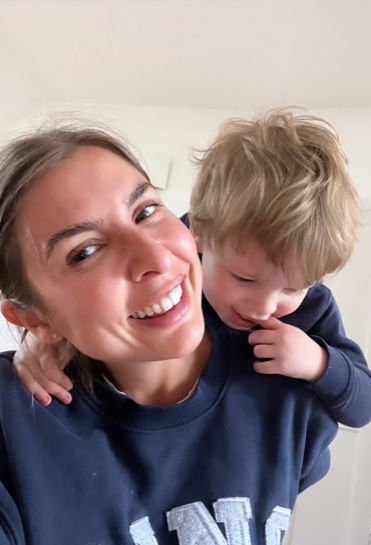 Zoe Duce is on a mission to level the playing field for professional parents in the UK, bringing clarity to complicated and undefined maternity processes without sacrificing their careers
Despite years of supposed progress towards equality, a critical issue remains unresolved: one in five women in the UK step back or drop out of their careers after having children. But according to Zoe Duce, it’s not a lack of ambition driving this; it’s a lack of systems, planning, and clear processes to make both motherhood and careers sustainable.
Zoe Duce, 38, from London, says that “nobody is owning the process” when it comes to maternity leave and the return to work. This leaves professional mothers, managers, and employers all navigating one of the biggest career transitions without clear structure or accountability.
After more than a decade working in fast-paced leadership media roles across London and New York, leading teams and building her career to the height of success, nothing prepared Zoe for what she would lose when she became a mother. Like many women, Zoe planned her return to work, excited to get stuck back in, only to be hit with a sobering reality.
“Maternity leave hit me harder than I expected mentally. I’d built my life around a fast-paced career in media for 10 years, and then overnight, it just stopped. It felt like going cold turkey; one minute I was surrounded by people and energy, the next it was quiet, isolating, and completely unfamiliar. I felt like I’d lost a huge part of who I was.”
“I knew exactly what would make me feel like me again,” Zoe explains. “Diving back into work projects, seeing friends, exercising, the things that gave me energy, momentum and my independence. I’d plan them, book them, look forward to them all week and then be forced to cancel because of the inevitable curveballs that come with parenthood.”
What followed was a constant cycle of rebuilding and resetting. Childcare would fall through. Her baby would get sick. Logistics would collapse. Work schedules would suddenly shift.
“It felt like the image of me getting back to 100%, and having an identity outside of being a mum, was a mirage I could see but not touch because there were curveballs after curveballs that I didn’t have a system to deal with, other than me cancelling my work plans.”
“Every time I tried to rebuild my life, something would derail it. I felt like I was constantly on the back foot,” Zoe says.
When she opened up to other mothers, she kept hearing the same responses: “it’s just s**t for a few years” or “this is just how it is”.
At the same time, Zoe noticed a stark contrast. While many professional mothers around her were struggling to maintain their careers and routines, their partners’ lives often appeared far less disrupted, reinforcing the cultural assumption that career progression and autonomy are things mothers are expected to sacrifice.
Zoe began to realise mothers were being expected to navigate one of the biggest transitions of their careers without the operational planning or contingency systems businesses rely on every day.
Zoe’s experience reflects a broader issue facing professional mothers in the UK.
According to recent research, more than a quarter (27%) of mothers either don’t return to work after maternity leave or leave within a year of coming back, with most citing poor employer processes, a lack of flexibility, and difficult reintegration into work.
“For me, that’s the biggest misconception,” Zoe says. “That women choose to step back because they want to. In reality, most are being forced into it because the system around them isn’t set up to make it work.”
Drawing on her expertise in project management, Zoe began building systems, first for herself. She set up structured childcare contingencies, created clear backup plans with her partner, introduced weekly planning routines, and built in non-negotiable time for work and wellbeing.
“The difference was immediate,” she says. “It wasn’t that the curveballs stopped, it’s that I finally had a way to handle them.”
For the first time since becoming a mother, Zoe felt a sense of control over her life returning.
“Getting my sense of self back felt liberating. Returning to going on work trips gave me something I thought I’d lost completely - a sense of ownership over my career that I’d worked so hard to build. For a while, I genuinely believed I’d have to give that all up.”
“It made me realise that choosing between motherhood and yourself should give pause. What if we changed the narrative to start building a more flexible way of living for mothers? Women should not feel forced to choose between career progression and motherhood; it’s about having the systems to support both.”
As friends and colleagues started asking how she was managing it, Zoe realised something bigger.
“At the moment, mums, managers, and employers are all winging it,” Zoe says. “But since having children is one of the biggest moments in a woman’s career, it deserves far more structure and attention than it’s currently being given. The solution is planning, not sacrifice.”
With around 590,000 women going on maternity leave in the UK each year, Zoe realised the motherhood penalty shouldn’t be inevitable, and that the systems she built to manage her own experience could form the basis of a solution.
What began as a personal survival strategy quickly evolved into a business. Zoe founded MoveThru, a UK-based company helping professional mothers and the organisations that employ them better navigate maternity leave and the return to work.
“My work focuses on two critical gaps: one, providing knowledge to address the lack of clarity around maternity leave and return processes and two, filling in the absence of practical systems to manage the realities of life with children.”
She has since worked with both individuals and companies to help professional mothers stay and progress in the careers they worked so hard for before having children, while also helping managers and employers create processes that work in real life, not just on paper.
To make her approach accessible, Zoe has created a free downloadable maternity leave and return plan, designed to give women, managers, and employers a clear framework for navigating the process.
“My goal is to remove the guesswork,” Zoe explains. “When mothers and their employers understand what they’re entitled to and how to plan for what’s coming, everything changes.”
The resource is already being used by professional mothers across the UK to reduce stress, regain control, and stay in the roles they’ve worked so hard to build.
Zoe is part of a growing movement challenging the idea that career sacrifice is an inevitable part of motherhood.
“I was told this was just how it is,” she says. “But I’ve seen first-hand that it doesn’t have to be.”