



Primary Times - the definitive what’s on and where to go family guide of activities and events for children of primary school age. Things to do with your kids during the school holidays including arts and craft activities, music and theatre for children, parties, competitions, days out, and family attractions along with term time drama schools, dance classes, after school clubs and sports activities. Things to do at a place near you!


Not a “night owl” yet: An extraordinary bird fossil from the Messel pit
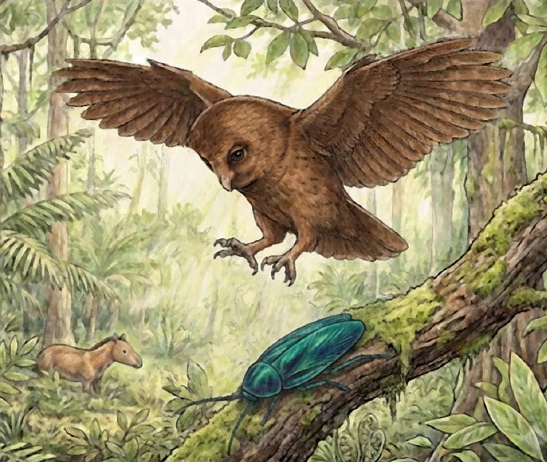 Scientists have discovered an extraordinary ancient owl fossil that could change what we know about these fascinating birds.
Found at the Messel fossil site in Germany, the tiny owl lived around 47 million years ago and measured just 12 centimetres long.
Unlike most owls today, which are famous for hunting at night, researchers believe this ancient bird was probably active during daylight hours.
One of the most exciting clues came from an unexpected discovery inside the fossil: the remains of a shimmering greenish-blue cockroach, thought to have been the owl's last meal!
Scientists also examined the bird's beautifully preserved feathers and wing bones. These suggest that the ancient owl had not yet developed the special adaptations that help many modern owls fly almost silently through the night.
The discovery is helping researchers understand how owls evolved and when they began hunting after dark.
The remarkably well-preserved fossil, which even includes feathers and evidence of the bird's last meal, offers a fascinating glimpse into the wildlife that existed millions of years ago.
Illustration: AI-generated image for illustrative purposes only.